Blog
Squeeze and 4-Bet War Playbook
An advanced preflop guide explaining linear 3-bets versus wide opens, squeeze EV when dead money appears, value versus bluff 4-bets, and why 4-bet bluffs must include a disciplined fold point.
Squeeze spots and 4-bet wars are not about looking strong. They are about how each hand actually earns money
Preflop aggression becomes profitable only when you separate hands that win through pressure from hands that win through realization.
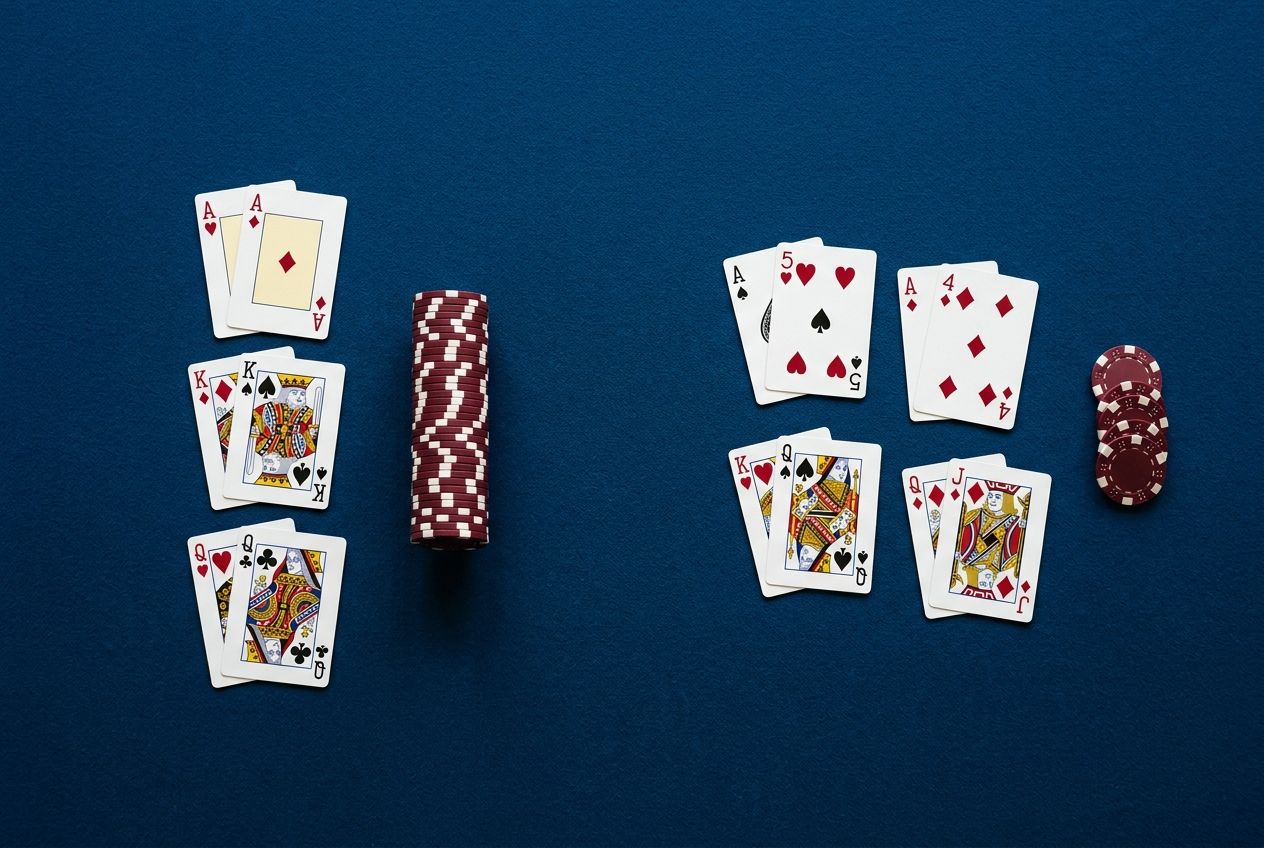
AQo, TT, A5s, and 76s can all feel aggressive. But they do not belong in the same aggressive bucket:
- wide opens invite more linear 3-bets from the top of the range,
- callers create dead money and increase squeeze EV,
- pretty suited connectors are not automatic squeezes,
- value 4-bets and bluff 4-bets serve different purposes,
- and bluff 4-bets must respect a fold point against 5-bet jams.
That entire structure becomes much easier once you stop asking, "Can I play aggressively here?" and start asking, "How does this hand earn money if I do?"
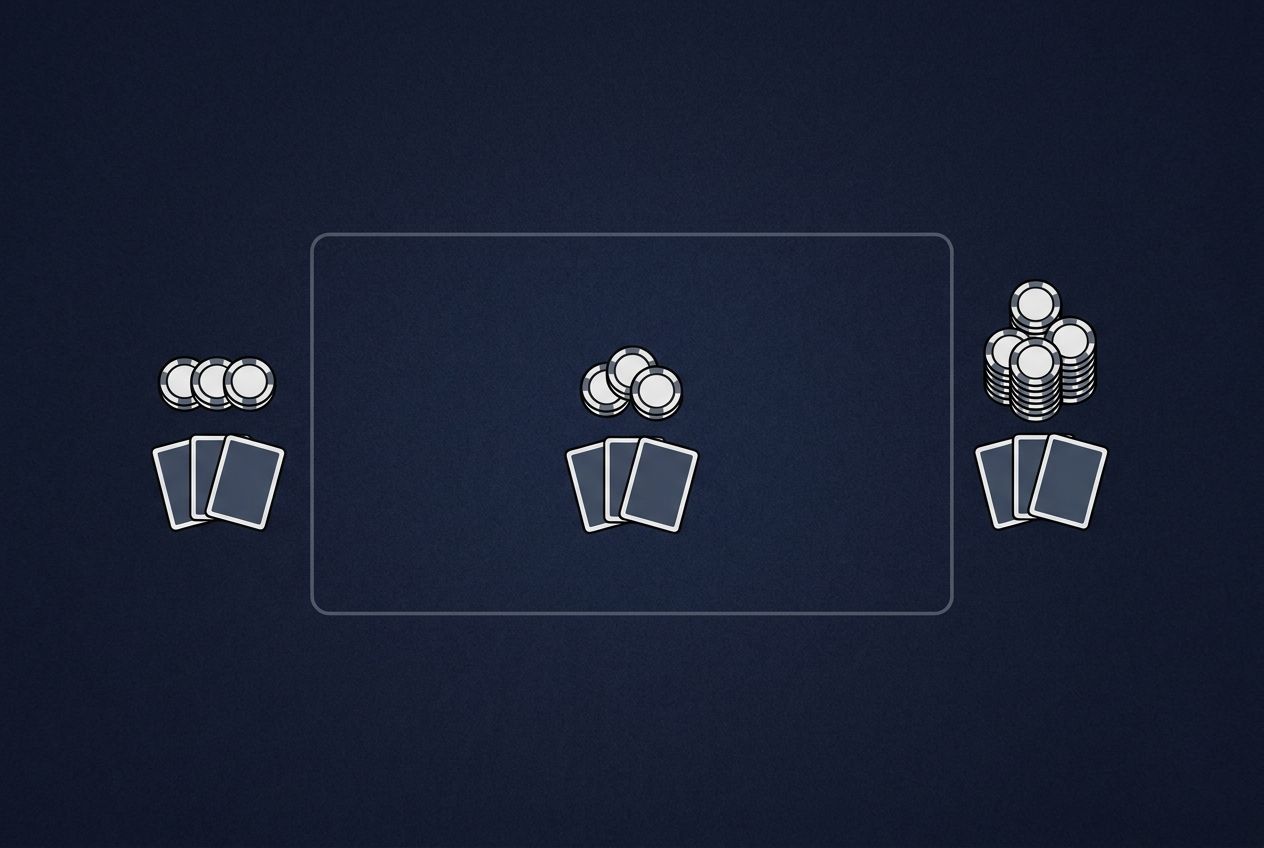
Wide opens reward linear 3-bets from the top of the range
Against a wide CO or BTN open, many strong broadways and pairs make money more directly by building the pot and taking the initiative.
Take AQo on the button against a CO open. Flatting is possible. But 3-betting often earns more because:
- the opener is still wide enough to continue too loosely,
- fold equity exists immediately,
- position remains yours when called,
- and the postflop stack-to-pot ratio becomes more manageable for a strong broadway hand.
That is what a linear 3-bet family really is. It is not a bluff family. It is the top section of your range attacking the wider open for direct EV.
Squeeze EV rises when dead money enters the pot, but not every hand wants to claim it
Once an opener and a caller both enter, the pot becomes attractive. But the best squeeze candidates are still determined by blockers, equity shape, and postflop realism.
TT in the SB facing MP open plus BTN call is a classic squeeze. Dead money is already present, both ranges are somewhat capped compared with pure premiums, and calling out of position into a multiway pot wastes a lot of value.
By contrast, 76s may look fun to squeeze, but it often earns more through realization than through fold equity. It lacks premium blocker value, and when called it still depends heavily on making hands. That means it should not automatically be treated like an aggressive squeeze class.
This is the key squeeze rule:
Dead money makes squeezing better, but blockers and equity shape still decide which hands actually want the job
Value 4-bets and bluff 4-bets must never be emotionally mixed
A value 4-bet grows the pot against worse continues. A bluff 4-bet seeks folds while retaining enough structure if called.
With KK, a CO open facing a BTN 3-bet is a clear value 4-bet. The hand wants money in the pot, dominates enough continues, and punishes the 3-bettor's bluffs.
With A5s, the story is different. The ace blocker removes part of the strongest continue range, flatting can be awkward, and the hand keeps some playability if called. That makes it a natural bluff 4-bet candidate.
The mistake is not using either one. The mistake is treating them as the same button click. They are not. One wants action. The other wants folds.
A good bluff 4-bet includes a fold point before the button is pressed
If your bluff 4-bet plan does not already include a fold to 5-bet jams, then you do not yet have a bluff 4-bet plan.
This is where many players break the tree. They 4-bet A5s, then feel priced in emotionally when a jam comes back. But that was never the purpose of the hand. The point of the bluff 4-bet was to create fold equity, not to turn the hand into a stack-off candidate.
That makes one of the most important playbook lines in this entire area:
Bluff 4-bets need disciplined folds versus 5-bet jams
Without that rule, 4-betting becomes emotional escalation instead of structured aggression.
The practical preflop aggression tree
| Node | Practical default |
|---|---|
| Wide open from late position | Linear 3-bet strong broadways and pairs |
| Open plus caller | Dead money increases squeeze EV |
| Suited connector with weak blocker value | Often prefers realization over squeeze |
| Premium value hand | 4-bet for value and pot growth |
| Blocker-rich suited ace | Natural bluff 4-bet candidate |
| Bluff 4-bet facing jam | Respect the pre-planned fold point |
The expensive mistakes in these trees are classification mistakes
Most players do not lose in squeeze and 4-bet spots because they are too passive. They lose because they misclassify how a hand is supposed to earn money.
The common errors:
- calling too passively with strong linear 3-bet candidates like
AQo, - missing squeeze opportunities with hands like
TT, - over-squeezing suited connectors that want realization,
- 4-bet bluffing with no willingness to fold versus a jam.
All four are really the same leak under different clothing.
Study
Practice squeeze and 4-bet trees in Study
Train linear 3-bets, squeeze EV, value 4-bets, bluff 4-bets, and disciplined folds versus 5-bet jams through repeated preflop pressure nodes.
Final Summary
Squeeze and 4-bet strategy is not a test of courage. It is a test of whether you understand the hand's EV engine.
Keep these three action rules:
- Attack wide opens with linear 3-bets from the top of the range.
- Use squeeze aggression when dead money appears, but do not pretend every suited hand is a blocker hand.
- Bluff 4-bets must contain a real fold point versus 5-bet pressure.
Once those rules are clear, preflop aggression becomes structured instead of reactive.
Study
Related Study lessons
Related articles
Continue with another angle on the same decision.
3-Bet and 4-Bet Response Basics
Treat 3-bet pots as structured range clashes, not emotional ego battles. Once you sort hands into response buckets, preflop becomes much cleaner.
Thinking in Ranges for Beginners
Poker gets clearer when you stop guessing one exact combo and start comparing whole groups of hands that can still exist.
Blind Defense and Resteal Adjustments
Big blind defense and small blind defense are not the same problem. This guide explains why BB defends through price while SB often needs more aggressive resteal logic.