Blog
River Value, Bluff, and Blocker Decisions
An advanced river strategy guide explaining thin value, polar value, blocker-driven bluffs, and sizing through target call ranges and target fold ranges.
The river question is not "Am I strong?" It is "Who do I want to call and who do I want to fold?"
Good river play begins with target ranges, not with emotional confidence in your own hand.
Many players start river thinking from the wrong end. They ask whether their hand feels strong enough. But a better river framework asks:
- is this hand thin value or polar value,
- which weaker hands do I want to call,
- which bluff catchers do I want to fold,
- and how much does my blocker profile reduce the opponent's strongest continues?
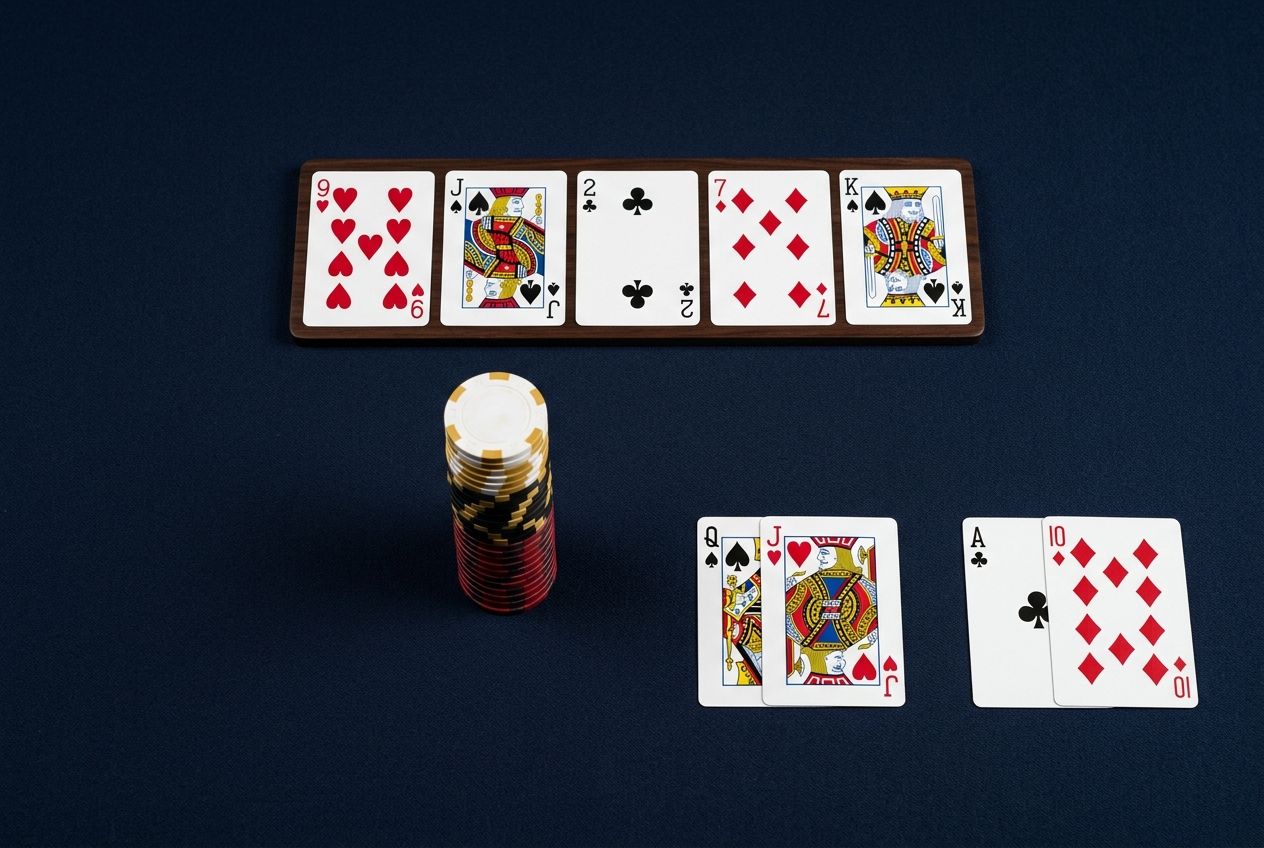
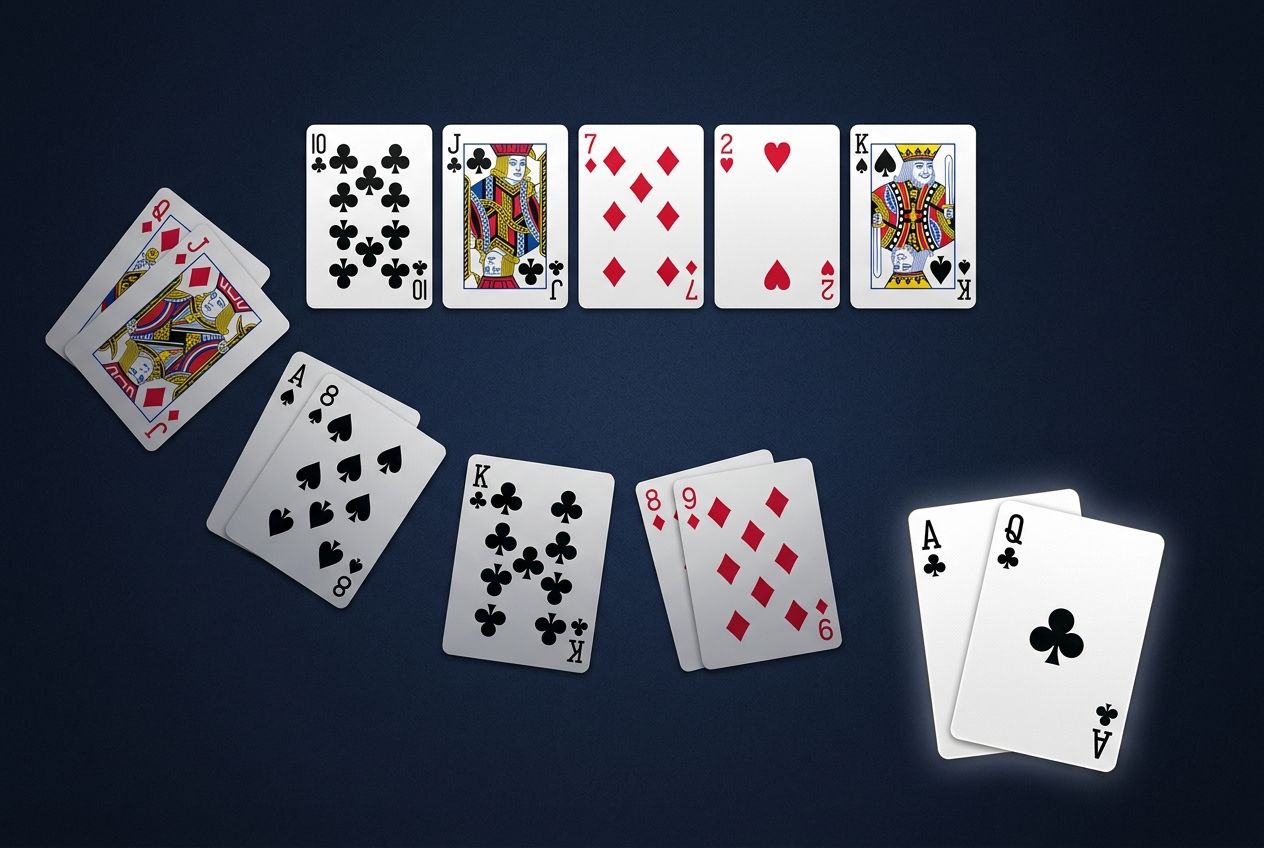
That is the exact logic river decisions require. KQ often wants a thin-value size, a wheel straight often wants a polar size, and Ah5h is a high-quality bluff candidate because its blockers actually matter.
Thin value and polar value are both value, but they do not use the same language
Thin value tries to keep weaker calls alive. Polar value tries to pressure a broader bluff-catching range with a bigger decision.
Take KQ on a runout where weaker Qx, 8x, and curiosity calls can still exist. That hand is not a nut hand. It is a thin value hand. If you bet too large, the hands you wanted to call may disappear, leaving only stronger continues.
Now compare that to a wheel straight on a polarized river node. That hand no longer needs weaker top pairs only. It can target a wider bluff-catching range. That naturally invites a bigger size.
This gives the first playbook split:
Thin value keeps weaker calls alivePolar value pressures a wider bluff-catching range
A bluff candidate is not just a missed draw. It is a missed draw with useful blockers
The fact that a draw missed is only the start. The real question is whether the holding removes enough strong calls to deserve bluffing priority.
Compare Ah5h and JhTh on the same busted-heart river. Both missed. But they are not equal.
Ah5h blocks some of the strongest ace-x continues and helps remove stronger calling hands. JhTh does much less of that. So even though both are busted draws, one is a premium bluff candidate and the other often slides backward in the bluff queue.
That is why blocker-driven river play starts with this rule:
Not all missed draws deserve bluffing priority. Good blockers go first.
Sizing follows the target range, not your ego
River size should be chosen by what kind of decision you want the opponent to face, not by how emotional the hand feels.
This creates a clean practical map:
| River hand class | Practical size logic |
|---|---|
| Thin value | Use a size that keeps weaker calls alive |
| Polar value | Use a size that pressures broad bluff-catcher regions |
| High-blocker bluff | Use a large size when the target fold range is real |
| Weak-blocker bluff | Often check or fall behind in bluff priority |
The point is simple. Size is not just about strength. It is about target design.
Bluffs also need a target fold range before they are worth firing
A bluff is only well designed if you know which specific bluff catchers you are trying to push out.
Suppose Ah5h missed after two barrels. If your target folds are weak Qx, Kx, and one-pair bluff catchers, then a small river stab is usually poor. It offers easy calls and fails to stress the intended range. A larger polar size often works better because it actually attacks the part of the range you want gone.
But if your blocker profile is weak, that same big bet loses quality. Then the hand often belongs in the check bucket instead.
So the second major river bluff rule is:
Choose the bluff only if the blocker quality and target fold range both support it
The expensive river mistakes are usually classification mistakes
Players often lose not because they are too timid or too wild, but because they confuse thin value with polar value and premium bluffs with weak ones.
Common expensive mistakes:
- using oversized bets with thin value hands,
- underbetting extremely strong polar value,
- bluffing too many missed draws with equal confidence,
- or using weak-blocker hands as if they were premium bluff candidates.
All of those errors disappear more quickly once the river is seen as a target-range problem.
Study
Practice river value and blocker bluffs in Study
Train thin value, polar value, and blocker-driven river bluffs through repeated target-range decisions and sizing drills.
Final Summary
The river becomes clearer the moment you stop asking only how strong your hand is and start asking how your size interacts with the opponent's range.
Keep these three action rules:
- Separate thin value from polar value and size them differently.
- Promote good-blocker missed draws and demote weak-blocker misses.
- Bluff only when you know exactly which bluff-catcher range you are attacking.
That shift alone makes river play calmer, cleaner, and far more profitable.
Study
Related Study lessons
Related articles
Continue with another angle on the same decision.
How to Choose Bet Sizing When You Are Ahead and When You Are Behind
Bet sizing is not just about whether your hand is strong. It changes depending on whether you want to deny weak equity, charge draws, or push bluff-catchers into folds.
River Bluff Catching: Rebuild Value and Missed Draws
A missed draw is not automatically a bluff. Price the call, count line-consistent value, and include only missed draws that actually bet.
After a Turn Call, Discount Old Value and Add River Value Back
A turn call discounts strong hands already made, but the river can create new straights, sets, and two pair that must return to the range.