Blog
Poker Combos and Blockers Made Simple
An intermediate guide to combo counting and blocker logic, covering pair, suited, and offsuit combo counts, board reduction, and how blockers improve bluff and call quality.
Range reading becomes much stronger when you stop thinking in names and start thinking in combinations
"Villain can have AK" is not enough. The practical question is how many AK combinations are still left.
That is the jump combo and blocker thinking is meant to create. It transforms vague range reading into a more concrete process. Instead of asking only what is possible, you begin asking what is still likely.
Three ideas matter most:
- different hand classes start with different combo counts,
- the board removes some of those combinations,
- and your own cards remove some too.
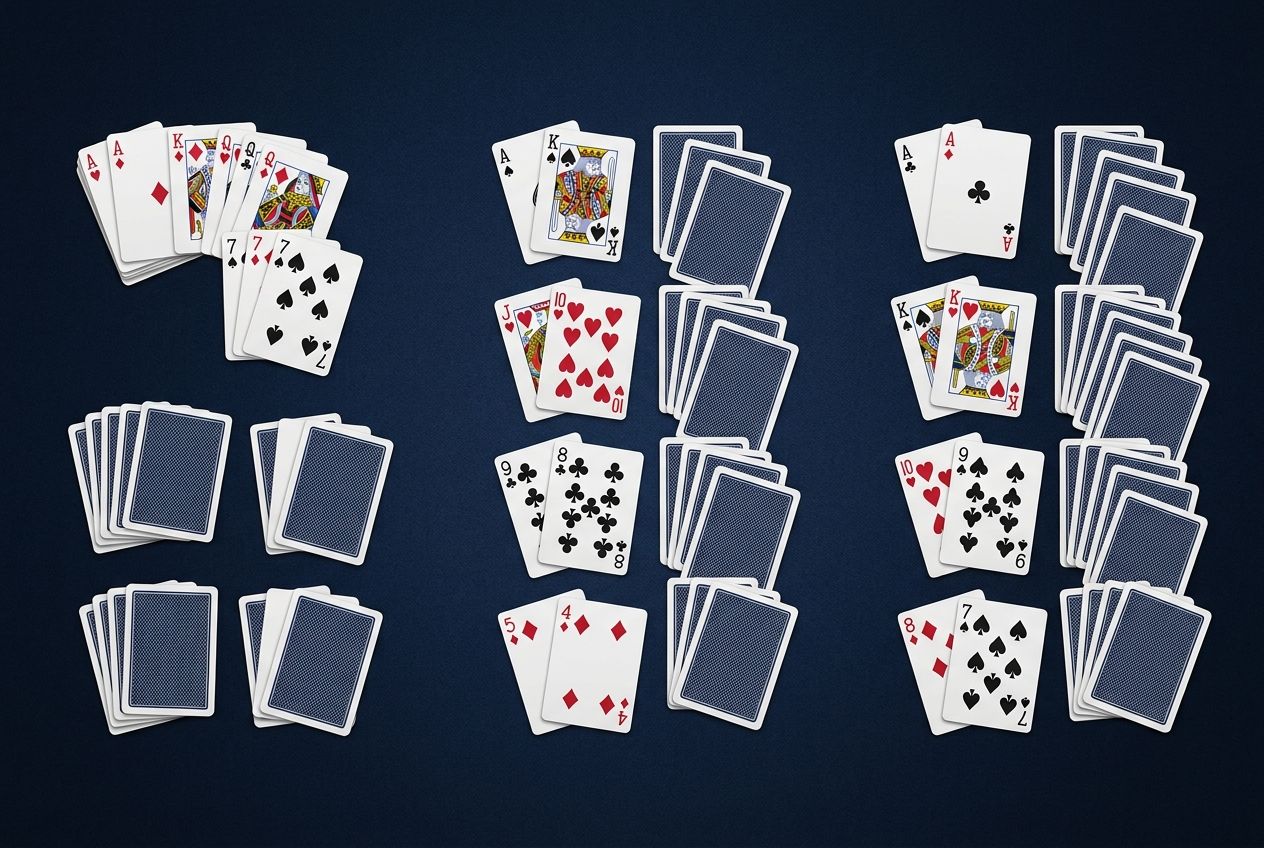
Start with the base combo counts
| Hand family | Base combos |
|---|---|
| Pocket pair | 6 |
| Suited hand | 4 |
| Offsuit hand | 12 |
So:
AAhas 6 combos,AKshas 4 combos,AKohas 12 combos.
This simple table already changes the way ranges feel. "Villain can have it" and "villain has enough of it for me to care" are not the same statement.
Boards reduce combo counts constantly
Once an ace appears on the board, some AA, AK, and AQ combos disappear. Once a two-tone texture appears, some suited combinations become more relevant while others lose importance. As streets pass, ranges are constantly getting filtered.
Consider A♠ 7♠ 2♦ after a preflop call. AA was never especially dense to begin with, and the ace on board reduces it further. Meanwhile A7s, 77, 22, and some flush draws become much more realistic. Without combo awareness, range reading turns into imagining the scariest hand every time.
A blocker is a card you hold that removes strong hands from villain
If you hold an ace, some AA, AK, and AQ combos disappear. If you hold the ace of hearts, some premium flush-related continues disappear too. That is why blockers matter so much in bluff selection.
Good blockers:
- reduce strong calling hands,
- increase bluff success slightly,
- and change which busted draws are the best bluff candidates.
| Blocker you hold | What it removes | Practical effect |
|---|---|---|
| Ace blocker | Some top-pair strong-kicker and premium bluff-catchers | Improves certain river bluff candidates |
| Flush blocker | Some nut-flush continues | Helps on flush-completing runouts |
| Straight blocker | Some nuts or near-nuts | Useful in polar river decisions |
Still, blockers are often overstated.
A blocker can improve the right bluff candidate, but it does not magically rescue a bad bluff on the wrong texture.
If the runout smashes the opponent's calling range, the bluff can still be poor even with a useful blocker.
Practical intermediate use
Combo and blocker thinking is not about showing off math. It helps with decisions:
- choose better bluff candidates,
- estimate whether strong value hands still remain often enough,
- and judge whether weaker calls are still available for thin value.
Once you think this way, hand reading becomes much less emotional. Instead of saying "I feel like he always has it," you can say "the strongest value region is possible, but there may not be enough combos for me to over-fold."
Common mistakes
The first mistake is confusing possibility with frequency. A hand can be possible without being common enough to drive your entire decision.
The second mistake is overrating blockers. Having an ace blocker does not automatically make every river bluff good.
The third mistake is counting only bluff combos and ignoring value combos. Good range reading compares both sides.
The fourth mistake is failing to update ranges as streets pass. A flop range is not the same thing as a river range.
You do not need perfect counting to get stronger
In real play you do not need spreadsheet precision every hand. A practical three-step process already goes a long way:
- know the defaults: pair 6, suited 4, offsuit 12,
- notice what the board removes,
- notice what your hand removes.
That is enough to clean up both your bluffs and your bluff-catches.
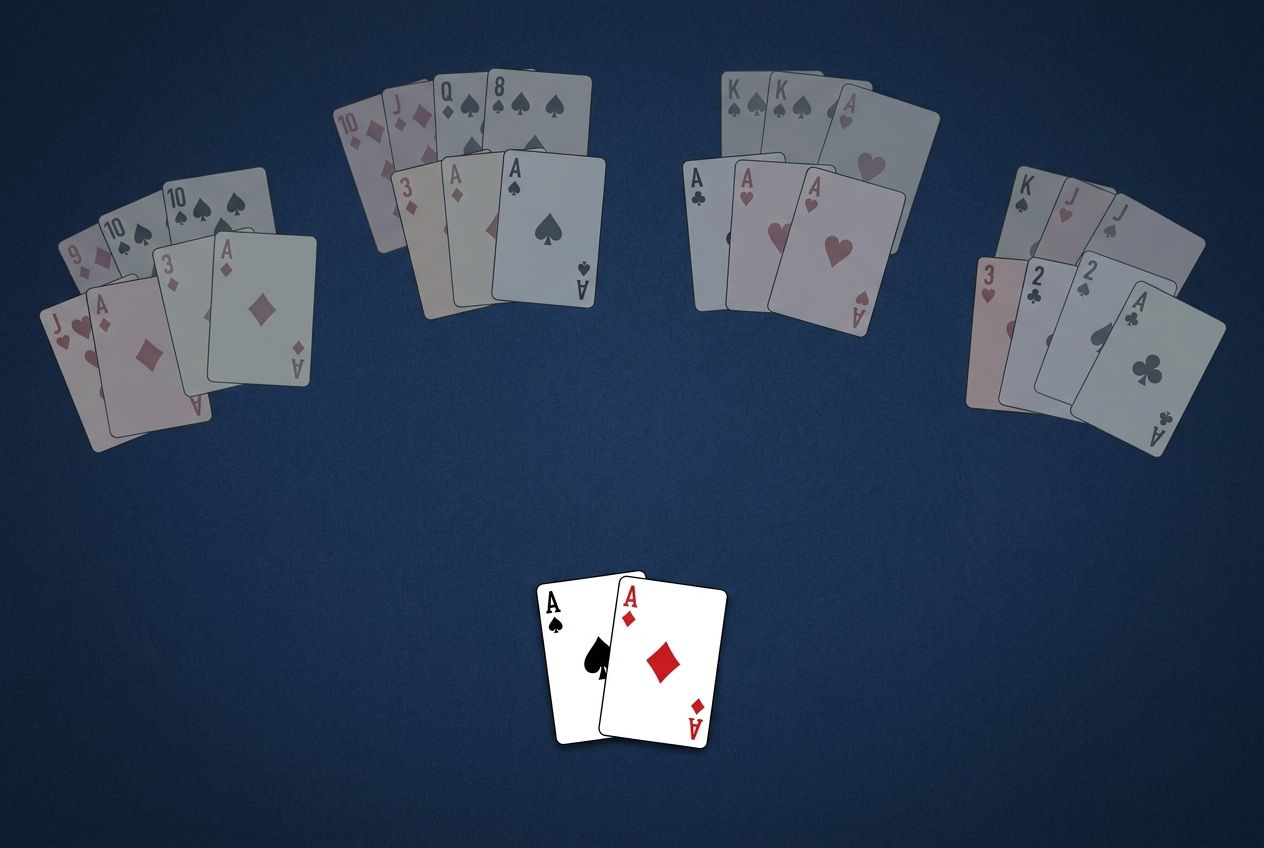
Study
Practice combo and blocker reading in Study
Learn how base combo counts, board removal, and blocker effects change real range reading through guided scenarios.
Final Summary
Combos and blockers make range reading less vague and more usable.
- Learn the base counts: 6, 4, and 12.
- Remember that board cards keep reducing ranges.
- Use your own cards to judge bluff and call quality more intelligently.
Study
Related Study lessons
Related articles
Continue with another angle on the same decision.
A Good Hand Does Not Always Mean You Should Call All-In
Hands like AKo, AQs, JJ, and TT are strong, but they are not automatic all-in calls in every spot. This guide explains why good-looking hands and good all-in calls are different things, and how to think about coinflips in practice.
How to Understand MDF and Use It at the Table
MDF is not a chart you memorize for its own sake. It is a defense baseline that helps you understand why small bets require wider defense and big bets allow narrower defense.
Semi-Bluff EV and Draw Aggression Framework
Not every draw should attack, and not every draw should only call. This framework separates monster draws, medium draws, and pair-plus-draw hands through fold equity and realized equity.