Blog
Check, Call, Bet, and Raise Explained Simply
Learn what check, call, bet, and raise really mean, when each action is allowed, and how to avoid the most common beginner confusion.
Poker actions get easier when you group them by pressure
The cleanest beginner shortcut is simple: some actions start pressure, and some actions answer pressure.
A lot of early poker confusion comes from vocabulary. Players hear check, call, bet, raise, fold, and all-in in quick succession, then try to memorize the words one by one. That usually feels harder than it needs to.
The easier way is to sort actions by context. Every street begins in one of two states:
- no bet is currently in front of you,
- or a bet already exists and you must respond to it.
Once you know which state you are in, the menu becomes much clearer. That is why strong hand reading starts with clean action language. If you confuse bet and raise, or check and call, the whole hand history becomes harder to interpret.
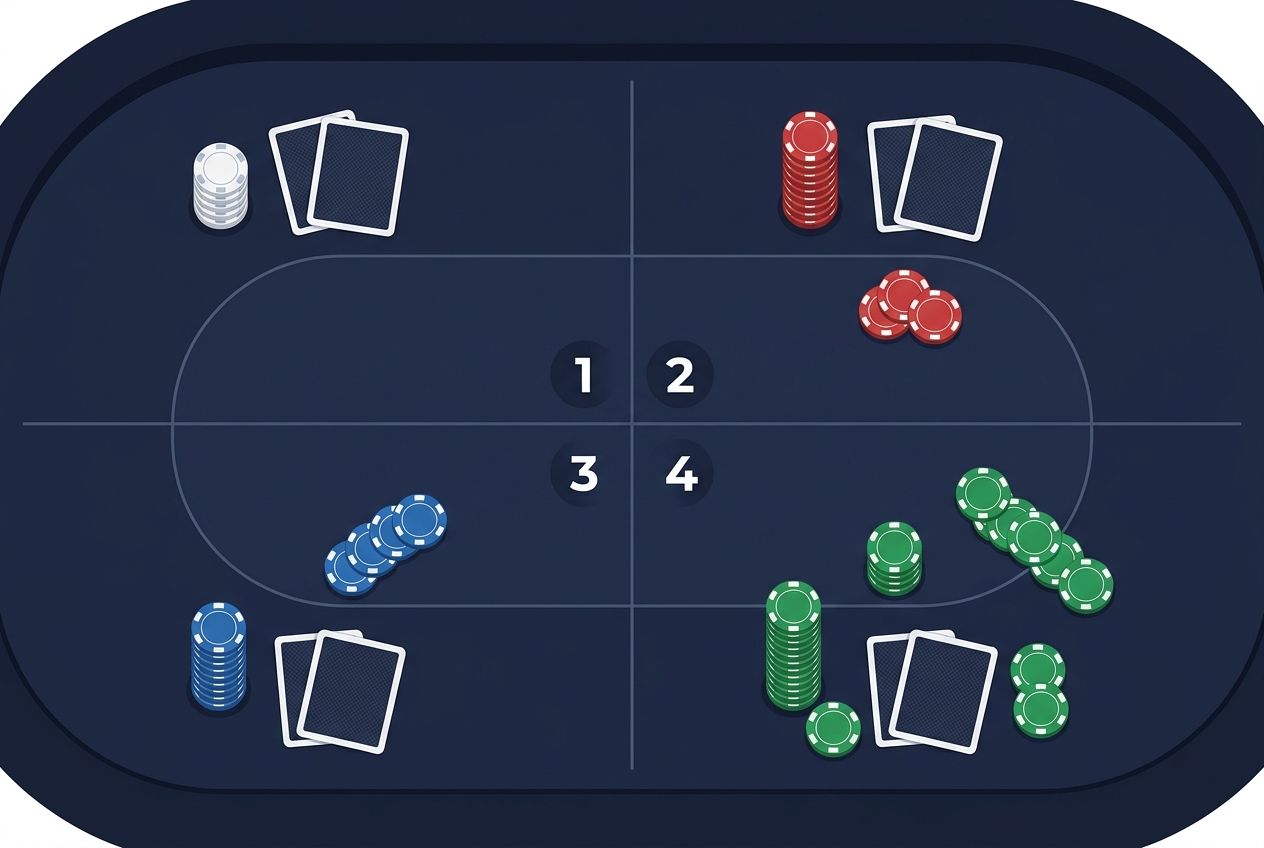
If nobody has bet yet
When there is no bet in front of you, the main choice is whether you start pressure or pass the option.
In an unopened decision point, your legal actions are usually:
- Check: pass without adding chips.
- Bet: put chips in voluntarily and force a response.
That distinction matters because a check does not build pressure. It keeps the action open for later players. A bet changes the state of the hand immediately by creating a price everyone else must respond to.
Beginners often understand the words separately, but still hesitate in real hands because they do not attach them to the board state. The useful trigger is not memorizing definitions in isolation. It is asking:
“Is there already pressure in front of me, or am I deciding whether to create it?”
Once a bet exists, the menu changes
Now suppose an opponent already put money in. The decision tree changes completely. Your common options become:
- Fold: give up the hand.
- Call: match the current amount.
- Raise: increase the price above the current bet.
This is the point where beginner language gets muddy. Many players say “I bet” whenever they put chips in, even if they are responding to an existing bet. But if someone already bet and you increase the size, you did not bet. You raised.
That distinction matters for more than wording. It changes how you read hands. A raise represents more pressure than a call. A raise can re-open action. A call closes the action only in some situations. So the vocabulary is part of the strategic structure, not just table etiquette.
A clean memory rule
| Current state | Beginner memory rule |
|---|---|
| No bet yet | Check or bet |
| Bet already made | Fold, call, or raise |
This rule is simple, but it is powerful because it stops the most common beginner error: mixing up action names across different board states.
Why the difference between bet and raise matters so much
Clean action names create clean hand histories, and clean hand histories make later learning much easier.
Imagine hearing these two descriptions:
- “Villain bet turn, hero called.”
- “Villain bet turn, hero raised.”
Those are completely different pressure stories. If you flatten both into “hero put more chips in,” you lose the meaning of the hand.
That is why later concepts like range reading, thin value, bluff frequency, and river discipline depend on action clarity. Strategy becomes easier only after the language becomes precise.
The most common beginner confusions
Here are the mistakes that show up most often:
- Calling a raise a bet
If someone already bet, adding more is a raise.
- Confusing check with fold
Check means continue without adding chips. Fold means surrender the hand.
- Thinking call is passive weakness every time
A call can be weak, neutral, or strong depending on the spot.
- Forgetting that action availability depends on the current state
You cannot check if there is already a bet to you.
Those mistakes sound basic, but they create major confusion in study and hand review. Once the naming is clean, the hand becomes much easier to replay accurately.
The fastest way to think about action in real time
If you freeze in a hand, do not start with the word list. Start with the state:
- Has anyone bet yet?
- If no, am I checking or starting pressure?
- If yes, am I folding, calling, or increasing the price?
That sequence is much easier to use than trying to recall isolated definitions while the action is moving.
Action language is the foundation for later strategy
One reason this matters so much is that later concepts assume you can read action instantly. Range study, c-bet study, 3-bet study, and review tools all depend on one core skill:
recognizing what the action actually means without hesitation.
If check, call, bet, and raise still blur together, strategy will keep feeling heavier than it really is. Once the action labels become automatic, the rest of the game becomes easier to organize.
Study
Drill action selection in Study
Use short scenes to separate check from call, and bet from raise, until the choice becomes automatic.
Turn vocabulary into pattern recognition
The goal is not memorizing four words. The goal is reading the pressure structure of a hand immediately.
Study is useful here because repeated short scenes turn poker action into pattern recognition. Once you can instantly separate check from call and bet from raise, later concepts stop feeling like stacked confusion and start feeling like connected logic.
Study
Related Study lessons
Related articles
Continue with another angle on the same decision.
How a Hold'em Hand Flows at the Table
A hand becomes much easier once you can instantly spot the button, the blinds, and who acts first on each street.
How to Read Poker Cards and Hand Notation
From ranks and suits to suited, offsuit, pocket pairs, and `AKs` style notation, this guide helps beginners read poker shorthand without hesitation.
Showdown, Kickers, and Best Five Cards
Knowing hand rankings is not enough. You also need to know when showdown happens, how the best five cards are built, and when kickers actually decide the winner.