Blog
Money-Making Spots and Money-Burning Spots in Poker
A practical exploit guide to recurring poker profit spots and loss traps, using common small-stakes leaks like nit overfolding, calling-station overcalling, passive repeated checks, and maniac overbluffing.
Money-making spots and money-burning spots are usually simpler than players think
A winrate usually moves more from repeatedly stepping into good structures and avoiding bad ones than from a few dramatic hero decisions.
Many players look for profit in special reads. In real 6-max games, especially at small stakes, money often moves in much simpler places. If opponents fold too much, we can pressure cheaply and often. If opponents call too much, we can charge them harder with value. On the other hand, if we auto-fire bluffs into players who do not like folding, or make curiosity calls against lines that are mostly value, that is where money disappears.
Many small-stakes players still follow a rough fit-or-fold pattern after the flop. They continue when they connect and give up often when they do not. Against habitual bluffers, medium-strong hands often earn more as bluff-catchers than as automatic thin value or protection bets.
That means poker is not only about where to apply pressure. It is also about knowing where cheap pressure prints, where big value gets paid, where we should fold earlier, and where wider call-downs make more money than more aggression.
This article organizes that into the most practical format possible: four money-making spots, four money-burning spots, and a short table-side checklist you can actually use.
| Opponent or structure | Default money-making adjustment | Default money-burning mistake |
|---|---|---|
| Nit or overfolding pool | Cheap steals and small bluff c-bets | Hero-calling big rivers |
| Calling station | Bigger value bets and wider thin value | Automatic triple barrels |
| Passive caller | Delayed stabs after repeated checks | Giving too many free cards |
| Maniac | Wider bluff-catching and calmer call-downs | Overfolding or forcing thin value |
Money-making spot 1. A nit who folds too often
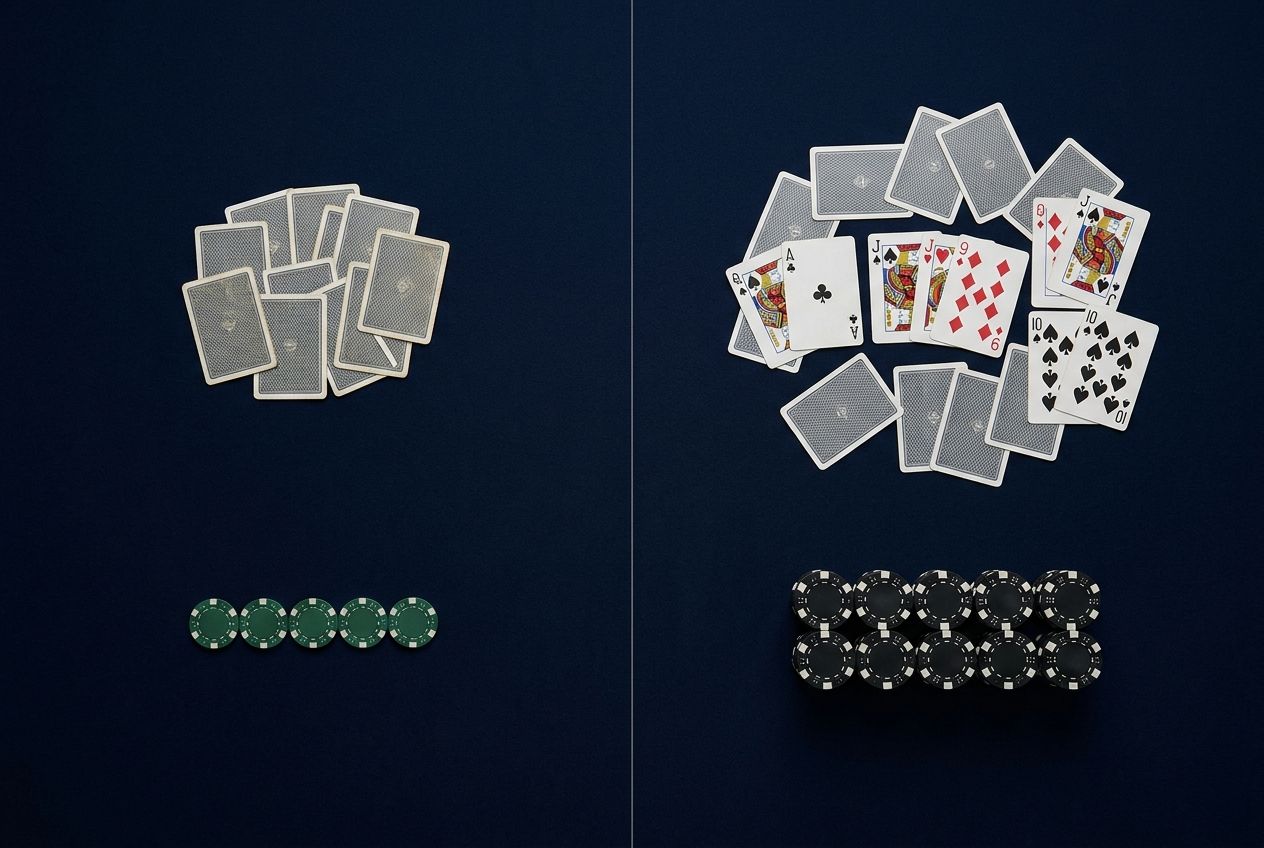
When the pool overfolds, the profit comes less from dramatic pressure and more from cheap pressure applied repeatedly.
The core idea is simple. If the blinds fold too often to button steals and overfold high-card flop c-bets, the profitable adjustment is straightforward.
- Open a little wider from late position
- Increase small bluff c-bet frequency
- Do not force unnecessarily large sizing
The real edge is not "bluff more at all costs." It is "bluff cheaply, and do it often enough." If the opponent is already giving up too much, frequency matters more than spectacle.
Money-making spot 2. A calling station who keeps paying off
The easiest exploit against someone who calls too much is not more balance. It is more value.
Many players see a loose caller and become overly careful about protecting range balance. But if the opponent continues too wide with weak pairs, gutshots, and curiosity calls, that means a bigger part of our medium-strong value region gets to print.
Against this type, hands like
- top pair with a good kicker
- stronger second-pair style value
- river thin value candidates
often earn much more than players assume. Bluff less. Size up value. And do not be afraid to widen the thin value region when the opponent keeps paying too lightly.
Money-making spot 3. A passive caller who checks twice
Repeated checks from passive players often expose weakness very directly. That makes the delayed stab one of the cleanest profit grabs in small-stakes poker.
This is a leak many players miss. After check-check on the flop and another turn check, people often freeze because they are worried about running into a trap. But if a passive caller keeps declining aggression, the range often becomes weaker and more capped.
That usually means
- fewer strong made hands
- less willingness to fight for the pot
- more hands that are simply ready to give up
In that structure, the delayed stab is not reckless aggression. It is low-cost profit extraction. Weak ace-high hands, missed backdoors, and low-showdown air often perform best in exactly this kind of spot.
Money-making spot 4. A blocker 3-bet against a nitty steal
If a tight opener steals but folds too much to 3-bets, good blocker hands become clean profit tools.
An A5s blocker hand captures the idea well. A tight nit on the button may still open enough hands to create a profitable resteal window, but if that player defends poorly versus 3-bets and rarely 4-bets, then blocker hands in the small blind become more than "okay candidates." They become premium exploit vehicles.
The key is not blind aggression. It is structure.
- Do we block strong continues?
- Is flatting awkward?
- Does the opener really overfold to 3-bets?
When those three answers line up, the 3-bet becomes one of the cleanest money-making spots at the table.
Money-burning spot 1. Auto triple-barreling into a sticky loose caller
If the opponent does not like folding, then firing the third shell just because our combo is a "standard bluff candidate" quickly turns into expensive charity.
A classic example is a sticky loose player who calls flop and turn, and then many players still auto-fire river because the hand was a missed draw with decent blockers. But exploit poker cares less about the theoretical bluff candidate and more about whether this particular opponent actually folds enough.
When the answer is no, the third barrel becomes one of the most expensive ways to burn money.
Money-burning spot 2. Curiosity-calling a value-heavy nit river line
Some players fold too much early, then become heavily value-weighted once they take a large river action. Ignoring that shift is a classic leak.
Exploit poker is not only about pressing harder. A nit may overfold on flop and turn, but once that same player reaches a large river bet or raise, the line can become heavily value-biased.
That is where players lose money with thoughts like:
- "Top pair good kicker still feels too strong to fold"
- "Maybe this scary card makes the opponent bluff more"
- "This sizing cannot be value that often, right?"
Sometimes those questions matter. But in nit-heavy pools, curiosity calls in this exact structure burn money over and over again.
Money-burning spot 3. Letting limpers in too cheaply
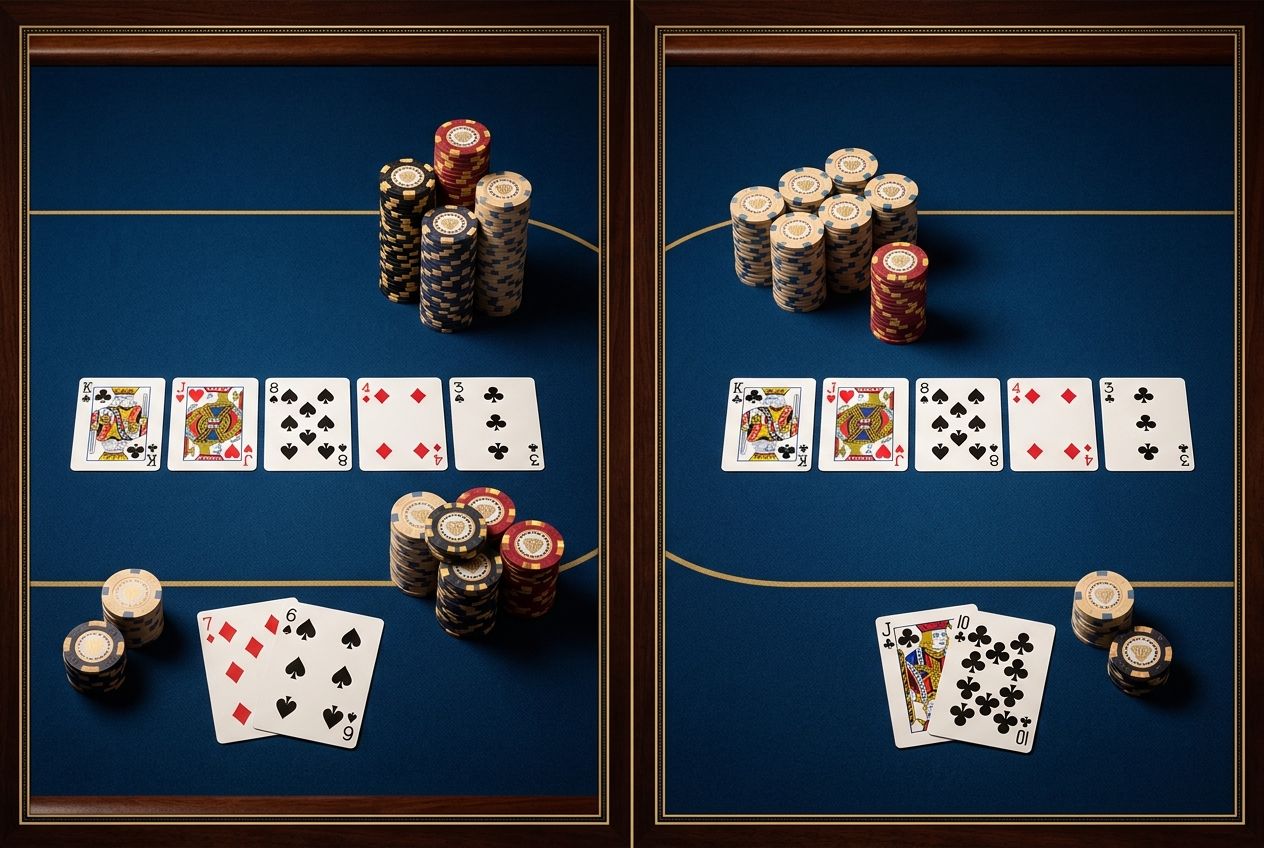
Calling behind or using weak isolation sizing against a loose limper often punishes the leak in the softest possible way.
The common thread is simple: loose limpers should usually be punished bigger, not invited more cheaply into multiway pots.
The money-making version of this spot is
- a larger isolation raise
- a better chance to play heads-up
- more initiative with the stronger range
The money-burning version is
- flatting because the price feels harmless
- using a timid iso size
- letting the players behind enter too comfortably
That turns a clear exploit opportunity into a murky multiway problem.
Money-burning spot 4. Over-betting medium-strong hands into habitual bluffers
Against some opponents, checking and bluff-catching with medium-strong hands makes more money than forcing thin value.
Against habitual bluffers, many players make one of two mistakes:
- they fold too much
- or they keep betting medium-strong one-pair hands for thin value or protection
But if the opponent is the type who leaves too much air and too many missed draws in the range by the river, medium-strong hands often earn more when they remain in bluff-catching mode.
So the leak is not only overfolding. It is also blocking the opponent's own mistakes by forcing the betting yourself when bluff-catch structures would have paid more.
The 5-second table checklist
When a spot feels unclear, run these five questions quickly:
- Is this opponent folding too much here or continuing too much?
- Is my best exploit cheap bluffing, bigger value betting, delayed stabbing, or wider call-downs?
- Is this a spot where the opponent gives up money, or a spot where I tend to force money in badly?
- Does my hand fit better as a value hand or as a bluff-catcher?
- Am I pressing a default button, or making a deliberate adjustment against a proven leak?
That checklist removes many of the most expensive mistakes because most poker profit does not come from brand-new genius. It comes from recognizing repeated leaks faster than the field does.
Study
Practice profit spots and loss traps in Study
Train spot recognition for nit overfolds, big value versus calling stations, delayed stabs after passive checks, and wider bluff-catching against maniacs through repeated scene-based Study lessons.
Final Summary
Money-making spots come from repeated opponent mistakes. Money-burning spots come from ignoring what the structure is really telling you.
- Against nits who overfold, pressure cheaply and fold more calmly to strong late aggression.
- Against calling stations, bluff less and collect more through bigger value and wider thin value.
- Against passive and overbluffing players, delayed stabs and bluff-catching often outperform automatic aggression.
In the long run, winrate moves less from heroic moments and more from recognizing which spots stack money and which ones quietly set it on fire.
Study
Related Study lessons
Related articles
Continue with another angle on the same decision.
A System That Connects Exploits, Playbooks, and Reviews
Strong players do not just learn isolated ideas. They connect opponent exploits, personal playbook rules, and review outputs into a loop that changes the next session.
GTO vs Exploit for Practical Players
GTO is not a magic answer sheet. It is a baseline. Exploit play is the skill of moving away from that baseline when opponents repeat real mistakes.
Poker Tilt Early Warnings: When to Stop a Session
Tilt often damages the decision process before it feels like anger. Use five observable signals and a Green-Yellow-Red recovery test to choose between continuing, pausing, and ending a session.