Blog
How a Hold'em Hand Flows at the Table
A practical beginner walkthrough of the button, blind posting, preflop order, street changes, and why the hand rhythm matters before strategy gets advanced.
A Hold'em hand starts with structure, not emotion
Before you think about bluffing, c-betting, or hand reading, you need to know who posted, who acts first, and how the street order changes.
Many beginners experience poker hands as a blur. Two cards are dealt, chips move, three community cards appear, and suddenly someone says "your turn." That is why early confusion usually has nothing to do with strategy. The first problem is that the hand rhythm itself is still unclear.
A no-limit hold'em hand becomes much easier when you stop seeing it as random motion and start seeing it as a repeating sequence. Every hand follows the same skeleton:
- the button defines relative position,
- the blinds seed money into the pot,
- preflop action begins from a fixed seat,
- the flop, turn, and river arrive in the same order,
- and the first active player after the button leads each postflop street.
Once that order feels automatic, later concepts stop stacking on top of confusion.
The first three things to identify every hand
If you want one repeatable beginner habit, use this one:
- Find the button.
- Find the small blind and big blind.
- Ask who acts first right now.
That quick scan solves most early mistakes. Players who skip it often act out of order in their own head. They know the cards, but they do not know the rhythm of the table.
The button matters because it shifts every hand. The blinds matter because they create the starting pot. The acting order matters because information does not arrive equally. Some seats must decide earlier with less clarity, while others act later with more information.
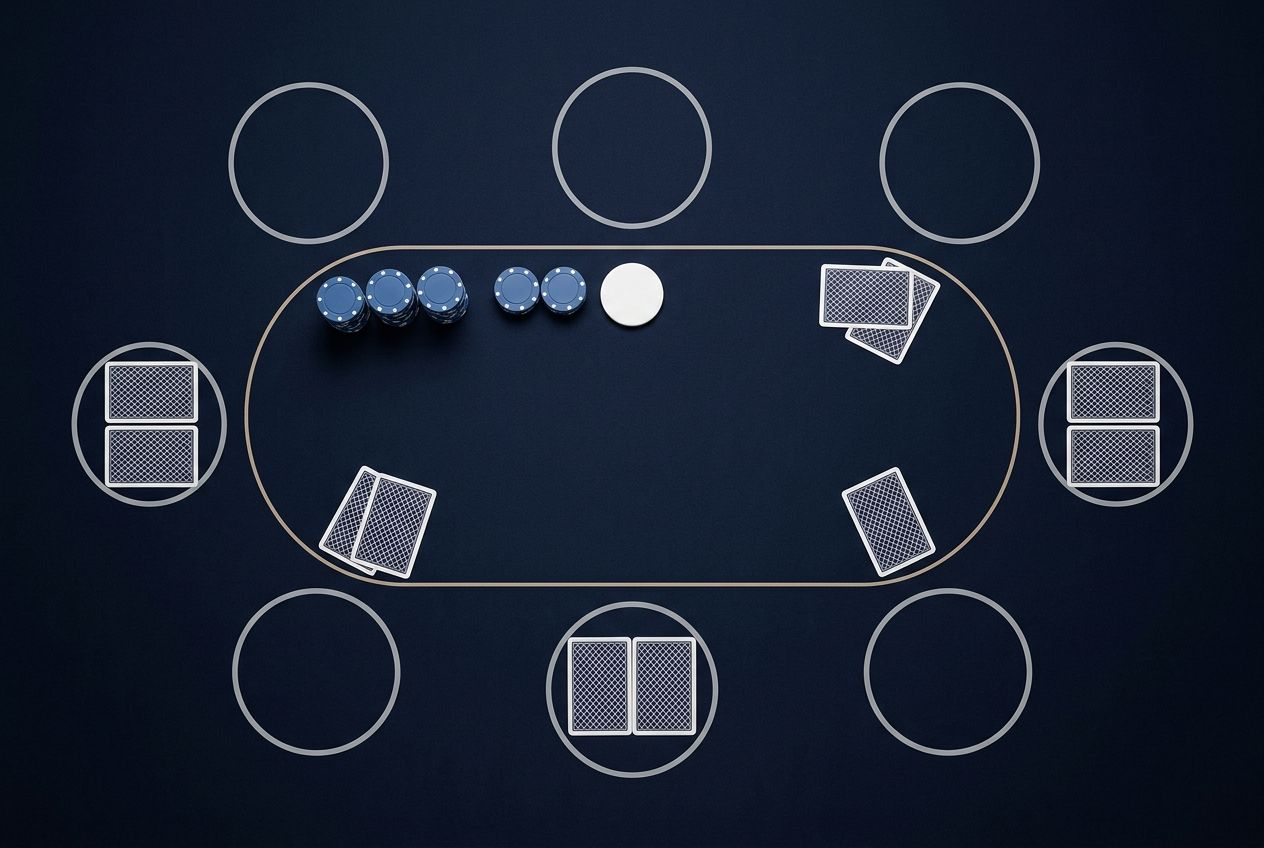
The hand starts before anyone chooses an action
Beginners often think the hand begins when they peek at their cards. In reality, the hand starts when the table posts forced money.
That matters for a simple reason: the preflop decision is not happening in a vacuum. There is already money in the pot, and the players who posted blinds will defend or continue from a different baseline than players who have not committed chips yet.
So even before the first voluntary action happens, the table has already created:
- a pot size,
- a seat order,
- and a pressure point for the players in the blinds.
That is why good players immediately look at structure before they even react emotionally to their hole cards.
Preflop action begins left of the big blind
This is the first rule many beginners mix up.
In a standard cash-game or tournament hand:
- the small blind posts,
- the big blind posts,
- and then the first player to the left of the big blind acts first preflop.
That means the button does not act first preflop. The button acts late preflop, which is one reason button position is so powerful.
The big blind is also special because it already has one blind invested. When action folds around, the big blind may check and see a flop if nobody raises. That detail becomes second nature later, but early on it helps to say it out loud:
Preflop does not start at the button. It starts left of the big blind.
The street order never changes
One of the most useful things about poker is that the board sequence is fixed. Every full hand moves through the same progression.
| Street | What changes |
|---|---|
| Preflop | Players act based on their private cards and blind structure |
| Flop | Three community cards appear and ranges start interacting with the board |
| Turn | One more community card arrives and many draws become clearer |
| River | The final community card arrives and the hand reaches its last betting street |
| Showdown | Remaining players compare the best five-card hand if nobody folds |
This fixed order is why poker strategy can become systematic. The structure repeats. Only the cards, bet sizes, and player tendencies change.
Why postflop action order feels different
Another early confusion point is that action order changes after the flop.
Preflop, the first player left of the big blind begins the action. After the flop, the first active player left of the button begins the action.
In practical terms, that usually means the blinds act early postflop while the button acts late. This is one reason position is such a long-term advantage. Acting later means seeing more decisions before committing your own chips.
If you want a simple memory aid:
- Preflop: left of the big blind starts.
- Postflop: first active seat left of the button starts.
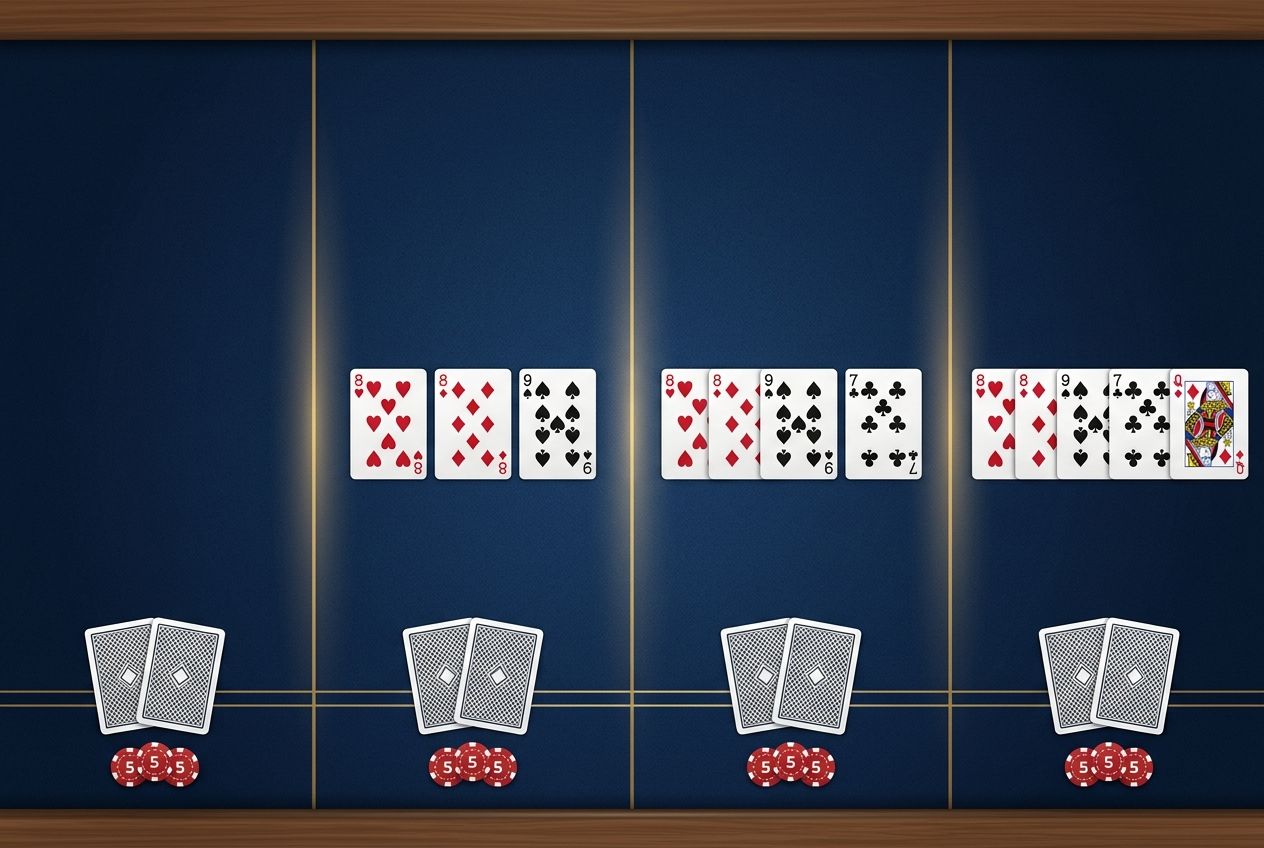
A hand is easier when you divide it into jobs
Beginners often try to understand the whole hand at once. That is too much. A better approach is to give each phase a job.
Preflop job
Decide whether your hand should fold, call, raise, or defend based on seat, position, and structure.
Flop job
Ask how your range and villain's range connect with the board texture.
Turn job
Re-evaluate pressure, equity, and how the pot size is changing.
River job
Decide whether your hand can value bet, bluff catch, bluff, or fold with clarity.
This framing helps because the hand stops feeling like one giant decision. It becomes a chain of smaller decisions, each attached to a street.
The beginner mistakes that come from weak hand-flow awareness
When the table rhythm is still fuzzy, the same problems appear again and again:
- Forgetting who acts first
This creates rushed or delayed decisions because you are mentally out of sequence.
- Ignoring the blinds
Many beginners underestimate how much forced bets shape preflop incentives.
- Treating each street as isolated
In reality, the flop only makes sense because of the preflop action that came before it.
- Missing why the button matters
The button is not decorative. It changes the action order across the entire hand.
The more automatic the hand flow becomes, the more mental space you save for real strategy.
A quick mental checklist you can use every hand
If you want a simple routine before strategy takes over, use this:
- Where is the button?
- Who posted the small blind and big blind?
- Who acts first on this street?
- How many players are still active?
- What changed from the last street to this one?
That fifth question is especially useful. The flop adds board information. The turn changes equity and pressure. The river removes future cards and forces final decisions.
Why this basic rhythm matters so much later
Advanced poker concepts only feel advanced when the foundation is shaky. Once the hand rhythm is clear, strategy gets cleaner:
- position becomes easier to understand,
- c-bets make more sense,
- delayed aggression becomes easier to spot,
- and hand reading becomes more realistic because you can follow the sequence that built the range.
Study
Practice the full hand flow in Study
Step through the blind structure, action order, and street transitions with scene-based Study lessons.
First make the hand flow automatic
If you can immediately identify button, blinds, acting order, and street sequence, later theory lands on something stable.
That is the real goal of this topic. Not memorizing vocabulary for its own sake, but making the table rhythm so natural that you can spend your attention on decisions instead of mechanics.
Study
Related Study lessons
Related articles
Continue with another angle on the same decision.
How to Read Poker Cards and Hand Notation
From ranks and suits to suited, offsuit, pocket pairs, and `AKs` style notation, this guide helps beginners read poker shorthand without hesitation.
Check, Call, Bet, and Raise Explained Simply
Poker actions become much easier when you separate actions that start pressure from actions that answer pressure.
Showdown, Kickers, and Best Five Cards
Knowing hand rankings is not enough. You also need to know when showdown happens, how the best five cards are built, and when kickers actually decide the winner.