Blog
A Good Hand Does Not Always Mean You Should Call All-In
A beginner-friendly guide to preflop all-in decisions, explaining why a strong hand is not always a call, what a coinflip really means, and why cash games and tournaments change how you should think about all-in confrontations.
A strong hand is not the same thing as a profitable all-in call
"This is a good hand" and "I should call off my stack here" are not the same sentence. All-in decisions depend on opponent range, stack depth, format, and how much variance the spot is worth taking.
Many beginners feel confident when they see AK, AQs, JJ, or TT. That instinct is understandable. These are strong-looking hands. The problem comes one step later. A strong-looking hand is not automatically a correct all-in call.
In some situations, it is an easy continue. In some situations, it is a close race. In some situations, it is a pretty hand that still belongs in the muck because the opponent range is too strong and the structure is too unfavorable.
If you do not understand that difference, you usually drift into one of two leaks. Either you convince yourself to call too much because the cards look pretty, or you lose a few coinflips and start treating every race as if it were a mistake.
This article is meant to fix that. We will separate "good hand" from "good all-in call," explain what a coinflip really means, and show why the same race can feel normal in a cash game but much more delicate in a tournament.
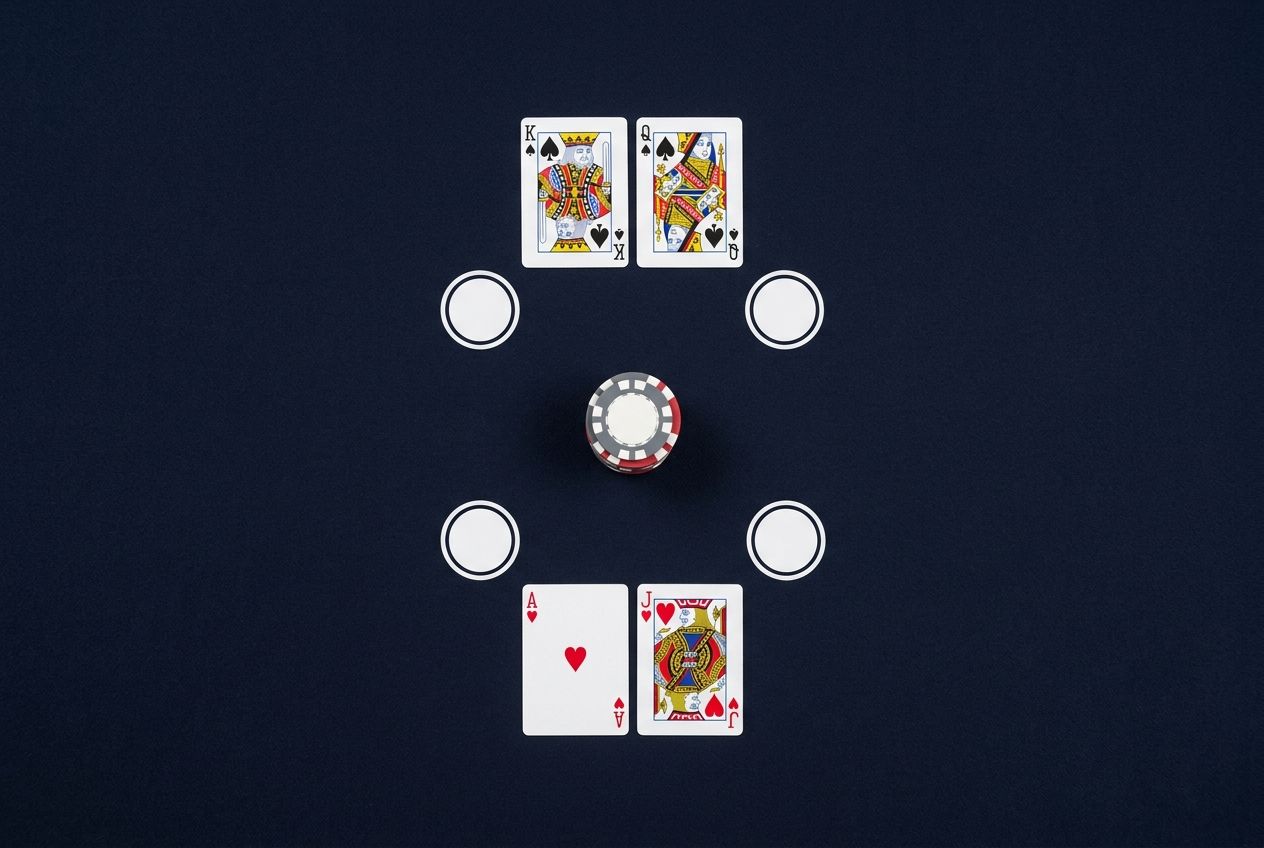
A strong hand can still be weak against a tight all-in range
The first question in any all-in decision is not "Do my cards look good?" It is "What does the opponent's all-in range actually look like here?"
For example, AQo is a very respectable hand. But against a very tight 100bb jam range, it can perform much worse than many beginners expect. On the other hand, in a blind-versus-blind 14bb shove spot, the same broadway family can become a very comfortable continue.
That means the same hand can shift dramatically by structure.
AQagainst a deep tight jam can be a fold.AToagainst a wide blind-versus-blind jam can be a call.
So the real question is not the absolute beauty of your hand. It is the relative strength of your hand against the range that is jamming.
A coinflip is not a disaster. It is a normal poker structure
Beginners often hate the word coinflip because it sounds like surrendering everything to luck. But in poker, a coinflip usually means something more useful: a confrontation where both sides still have meaningful equity.
Classic examples are easy to picture.
JJversusAKTTversusAQs- a medium pair versus two overcards
These spots are not evidence that poker is random chaos. They are evidence that ranges can collide in a way where one side is made already and the other side still has live overcards and strong improvement paths.
The correct question is not "Can I avoid every flip?" The better question is:
Is this a race I am supposed to accept in this stack and format?
That is what makes coinflips practical. They are not automatically good, and they are not automatically bad. They are simply high-variance confrontations that can still be strategically correct.
In cash games, a profitable race is usually easier to accept
Cash games care mostly about chip EV. You can rebuy, your chips are directly tied to money, and survival itself does not carry the same extra value it does in tournaments.
Because of that, profitable or acceptable races are often more natural to take. If a loose player is opening wide and continuing too wide, hands like TT, JJ, AQs, or AJs can become good stack-off candidates at shorter depths because they either dominate weaker continues or race cleanly enough against the rest.
| Structure | Practical question | Why it matters |
|---|---|---|
| Opponent range is wide | Am I only crushed, or am I racing and dominating enough hands too? | Wide ranges create more profitable continues |
| Stack is short | Does flatting leave awkward SPR, or does jamming simplify the spot? | Short stacks make preflop commitment more natural |
| Cash game | Is survival itself worth extra? | Usually no, so chip EV matters most |
In cash, "I do not like flipping" is not a strong enough reason by itself. The better question is whether the all-in decision is profitable over time.
In tournaments, the same coinflip can require more caution
Tournaments are different because chips won and chips lost are not always worth the same thing. Busting has a real cost, and surviving often has added strategic value. That means some races that look acceptable in pure chip terms become more fragile in tournament terms.
This does not mean you should avoid every coinflip. It means you should be more selective about when you take one.
Tournament caution grows when:
- you already have a workable stack,
- better spots may arrive soon,
- the opponent jam range is tighter than you first assumed,
- or payout pressure makes survival more valuable.
At the same time, there are short-stack phases where avoiding every race is impossible and even harmful. Around 10 to 15 big blinds, shove-and-call structures naturally create many race-heavy spots. If you fear all coinflips there, you often end up folding away too much equity and too many profitable opportunities.
Three common beginner mistakes
1. Thinking AK is always a call
AK is excellent, but context matters. Deep against a tight all-in range is one world. Short against a wide shove range is another. The hand name alone does not answer the question.
2. Thinking every coinflip should be avoided
If you treat every race as poison, you will become far too passive in many short-stack environments. Poker naturally contains race-heavy collisions. The skill is deciding which ones belong in your strategy.
3. Thinking the result proves the decision
If JJ loses to AK, that does not automatically mean the call was bad. If the range, depth, and format justified the stack-off, the decision can still be good even when the result hurts.
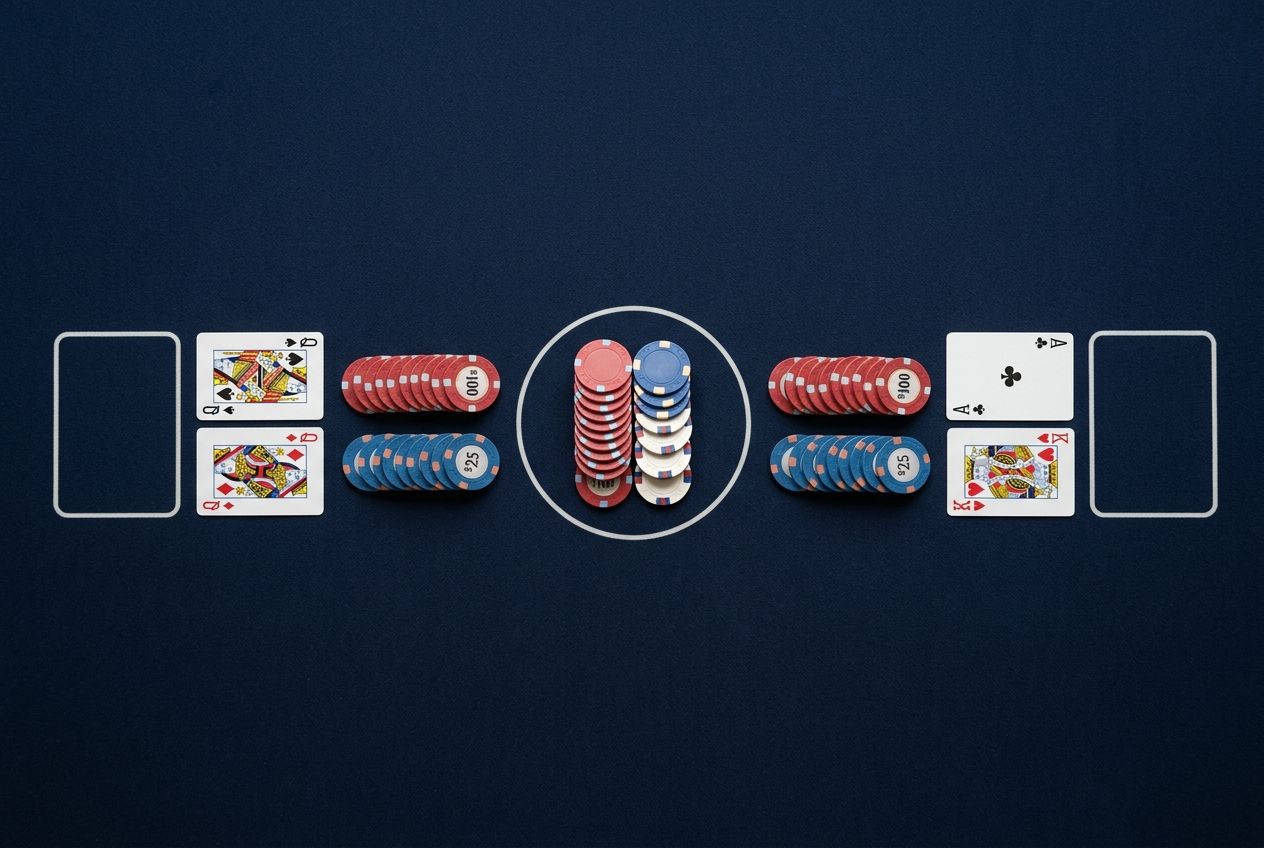
A practical all-in checklist you can use at the table
When you face a shove, run through this order.
- Is the opponent range wide or tight?
- Against that range, is my hand ahead, racing, or dominated?
- Is the stack depth naturally short enough for preflop commitment?
- Is this a cash game or a tournament?
- Is this variance worth taking in this exact structure?
That checklist alone is enough to calm many emotional all-in decisions. Instead of reacting to the beauty of your hole cards, you start reacting to the real shape of the spot.
The easiest sentence to remember
The most useful shortcut is this:
A good hand is a pretty hand. A good all-in call is a pretty hand that also survives the range and structure test.
Once you remember that sentence, your all-in thinking becomes much cleaner. You stop equating AQ, TT, KQs, or AJs with automatic commitment, and start asking the real questions: who is shoving, for how many blinds, and in what format?
Study
Practice short-stack all-in responses in Study
Continue training iso-jams versus loose limpers, medium-pair jam value, blind-vs-blind jam calls, and standard 10 to 15bb shove structures.
Final Summary
Coinflips are not proof that the game is random, and good-looking hands are not automatic all-in calls.
- All-in decisions depend more on opponent range and stack depth than on hand beauty alone.
- Cash games usually accept profitable races more naturally, while tournaments often require more selectivity.
- The key skill is separating "strong hand" from "correct stack-off hand."
Study
Related Study lessons
Related articles
Continue with another angle on the same decision.
Pot Odds, Outs, and Equity With Real Examples
You do not need advanced math to make better calls. You need a fast way to compare price, outs, and realistic improvement chances.
MDF, SPR, and Commitment Basics
MDF and SPR are not separate trivia topics. Together they explain how often you defend, how big your hand really is in the pot, and when commitment becomes natural.
Poker Combos and Blockers Made Simple
Real range reading starts when hands stop being labels and start becoming actual remaining combinations.