Blog
Flop Hand Classes: Made Hands, Draws, and Air
An intermediate postflop guide explaining how to classify flop holdings into made hands, draws, and air, and how those classes change betting, checking, and aggression quality.
Good flop play begins by classifying your hand, not by guessing whether it feels strong
Before you size a bet or decide whether to bluff, you need to know whether your hand is a made hand, a draw, or air.
The biggest difference between beginner and intermediate flop play is not aggression. It is classification. That is also the point of basic flop-classification work:
- identify made hands,
- separate draws,
- and understand which air hands deserve pressure and which do not.
If that work is skipped, flop play stays emotional.
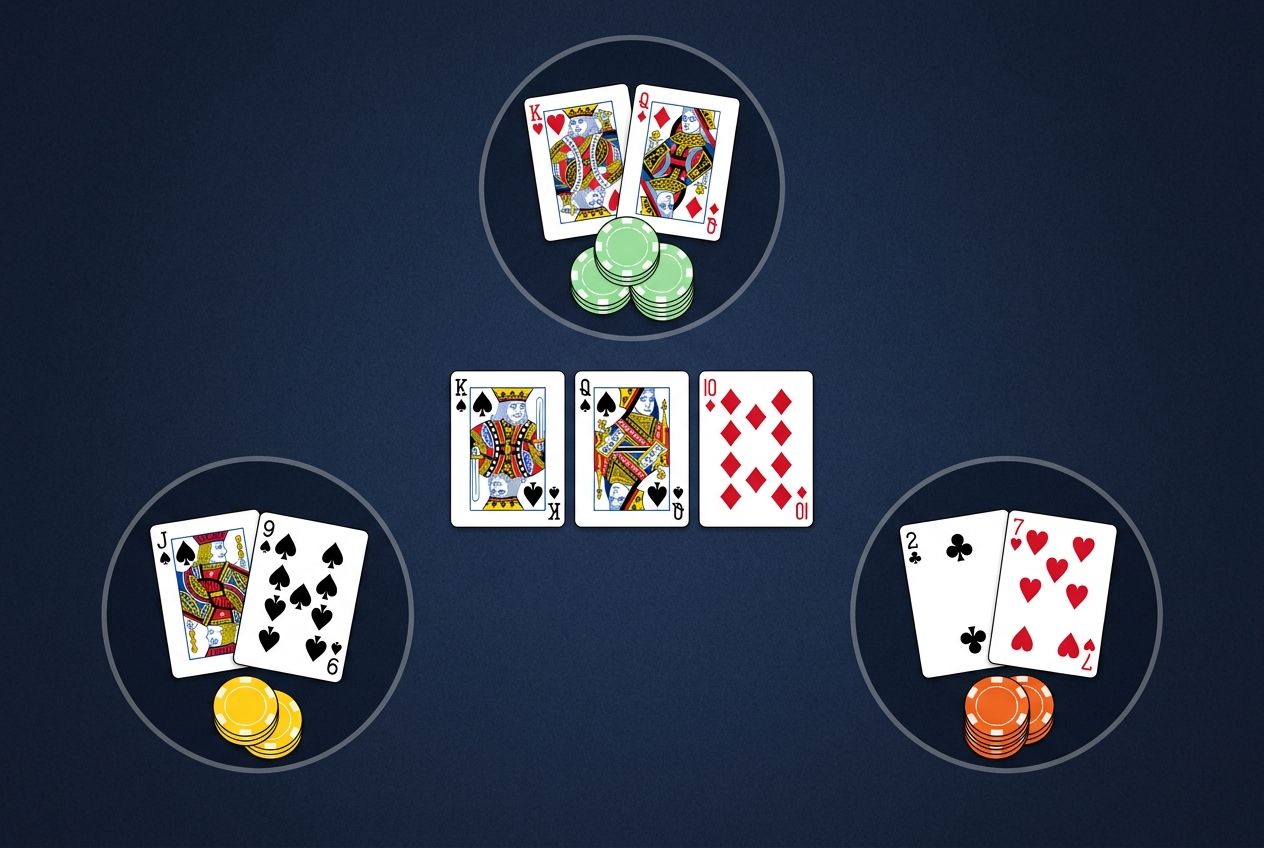
Made hands already own showdown value, but they are not all equal
One pair is not one category. Some made hands are strong value hands. Others are only medium-strength bluff catchers.
| Made-hand family | Practical idea |
|---|---|
| Strong made hands | Value plus protection |
| Top pair with strong kicker | Often a clear value-bet family |
| Medium-strength pairs | Need more caution and often fewer streets |
That is why classifying a hand as "made" is only the first step.
Draws carry future value, but not all draws deserve the same aggression
A draw is a hand with meaningful improvement potential. Flush draws, straight draws, gutshots, pair-plus-draw structures, and backdoor-heavy overcard hands all belong in this family.
But they do not behave the same way.
- strong draws can attack,
- medium draws may realize better by calling,
- pair-plus-draw hands can become premium aggression candidates.
Intermediate players need that distinction or they either bluff too much or too little.
Air is not an automatic bluff
Air should not be defined as "hands that bet." It should be defined as hands that need context before betting.
Some air hands still have overcards, backdoors, blockers, or future turn plans. Those can remain in a bluffing range. But pure air with no backdoor help and poor future cards often belongs in the check-back or give-up bucket.
This is one of the first real postflop filters strong players build.
A simple flop classification checklist
Ask:
- Is this hand already strong enough to value-bet?
- If not, does it have real draw value?
- If it is air, does it at least have blockers, overcards, or future cards?
- What happens on many turn cards after this action?
That framework alone improves flop decision quality immediately.
Common classification mistakes
- overvaluing weak top pair,
- treating every draw as a semi-bluff candidate,
- auto-c-betting backdoor-less air,
- turning showdown-value hands into unnecessary bluffs.
Each of those leaks gets smaller once the hand class is named correctly before the action starts.
The next step is building a turn plan
Flop classification matters not only because it improves the flop decision itself. It matters because it tells you what kinds of turn cards let you continue the story.
Strong made hands can keep value betting on many turns. Good draws can keep attacking when equity or fold equity improves. Weak air often needs a very favorable scare card before it deserves another bet.
When flop classification is clear, turn decisions feel less improvised and much easier to review.
In game, you can simplify the whole spot into four questions:
- Is this hand mostly a made hand, a draw, or air?
- Does betting win value, realize equity, or create folds?
- Does this hand have many good turn cards or very few?
- Is the opponent's range likely to over-fold or continue well here?
That short framework already makes flop play much more stable.
Study
Practice flop hand classification in Study
Train how to separate made hands, draws, and air on real flop textures and learn which action families fit each group.
Final Summary
Flop strategy becomes much easier once you know what kind of hand you are actually holding.
- Made hands need internal strength sorting, not just one label.
- Draws differ by aggression quality.
- Air needs context before it deserves pressure.
That is the beginning of real postflop structure.
Study
Related Study lessons
Related articles
Continue with another angle on the same decision.
One Pair in a Multiway Pot: When to Slow Down
One pair becomes fragile when extra ranges continue. Use players left, bet source, and clean improvement cards to choose between continuing, isolating, and slowing down.
River Bluff Catching: Rebuild Value and Missed Draws
A missed draw is not automatically a bluff. Price the call, count line-consistent value, and include only missed draws that actually bet.
After a Turn Call, Discount Old Value and Add River Value Back
A turn call discounts strong hands already made, but the river can create new straights, sets, and two pair that must return to the range.